
APC Slams Atiku Abubakar Over 'Ill-Gotten' Wealth and Campaign Funds
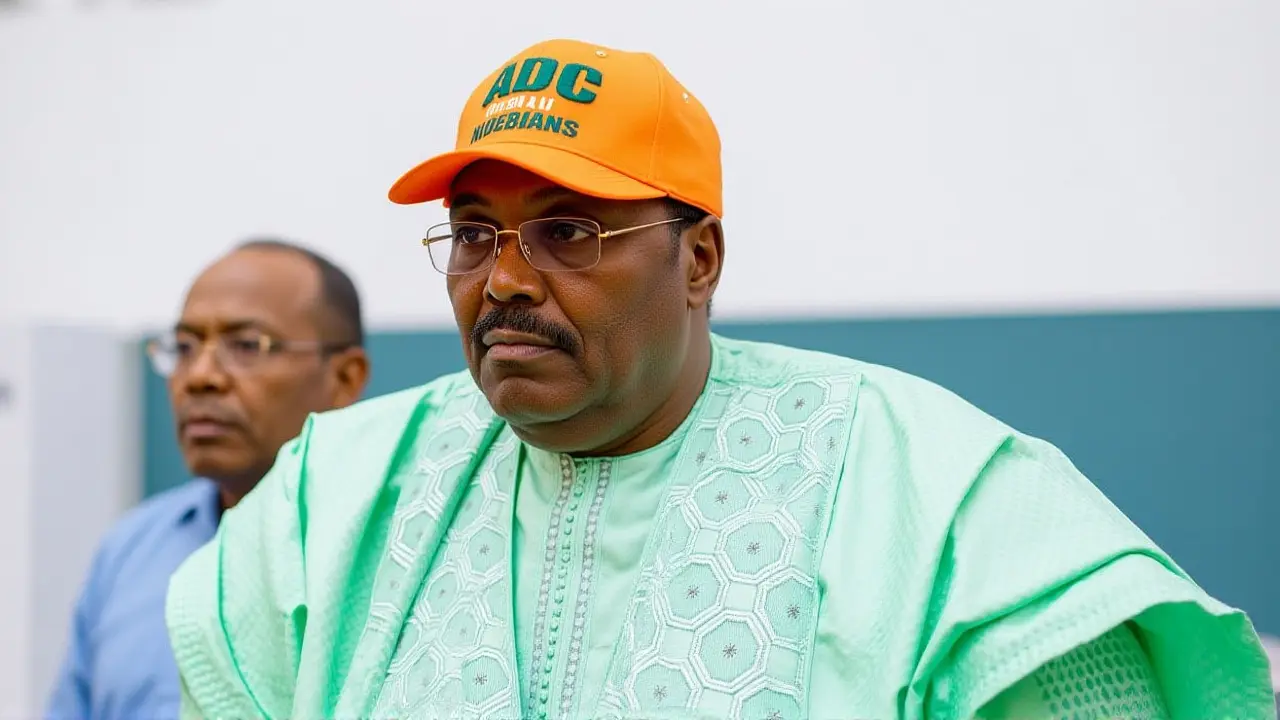
The All Progressives Congress (APC) has launched a blistering attack on the financial history of former Vice-President Atiku Abubakar, Presidential Candidate of the Peoples Democratic Party, questioning how a retired customs officer amassed the staggering fortune required to fund multiple bids for the presidency. The controversy erupted in Nigeria following Abubakar's emergence as the PDP flag bearer, sparking a heated debate over political financing and transparency in the lead-up to the national elections.
Here's the thing: it's not just a political spat. The APC is essentially accusing Abubakar of using "ill-gotten" gains to buy his way into the presidency. Yekini Nabena, acting spokesman for the APC, didn't mince words, describing the former VP as an "untrustworthy and unreliable character" with a performance record he labeled as "abysmally low." Turns out, the ruling party isn't just worried about his record, but about the potential for systemic corruption if those funds are eventually "recouped" from the public treasury.
The Price of Power: Allegations of Vote Buying
The APC's grievances center on a pattern of spending that they claim is far beyond the reach of a typical civil servant's pension. They point specifically to the 2014 APC National Convention, where Abubakar reportedly spent several million dollars attempting to secure delegates' votes. Despite the massive outlay, he finished third, trailing behind Muhammadu Buhari and Rabiu Kwankwaso.
But wait, the spending didn't stop there. During the more recent PDP presidential primaries, the APC alleges that Abubakar spent vast sums to secure the loyalty of virtually every delegate, eventually winning the ticket. The party is now asking a pointed question: if a candidate spends this much just to get the nomination, how do they plan to make that money back? The implication is clear—they believe the public treasury would become his personal ATM.
- 2014 Convention: Millions spent by Abubakar, resulting in a 3rd place finish.
- Recent PDP Primaries: Allegations of widespread delegate vote purchasing.
- Ownership Claim: Abubakar cites a 16% stake in Intels as a primary wealth driver.
- U.S. Transfers: Nearly $27 million allegedly moved through shell companies.
- Regulatory Action: EFCC investigation into PTDF fund disbursements.
The 'Luck' Factor: Abubakar's Side of the Story
For his part, Atiku Abubakar has always maintained that his wealth is the result of a combination of hard work, savvy business moves, and a bit of timing. He describes his success as "sheer luck of being at the right place at the right time." It's a classic "self-made" narrative, but the specifics lie in the oil sector.
Abubakar points to his 16 percent ownership interest in Integrated Logistics Services Incorporation (Intels), an oil services firm founded in the 1980s. Intels grew into one of the largest oil industry players in Africa. According to the former VP, the profits from these shares—held in a blind trust—fueled further investments across Angola, Congo, Brazil, and the Ivory Coast.
A Complex Web of Shell Companies and Secret Accounts
While the "lucky investment" story sounds clean, investigative documents tell a different, messier tale. An analysis of over 300 pages of financial records suggests a sophisticated network of over 30 bank accounts in the United States. These weren't just simple savings accounts; they involved shell companies and trustees designed to obscure the trail of money.
A figure known as Mr. Volpi alleged that Abubakar was the sole beneficial owner of the Guancy Trust Company. This entity, along with others like "Let's Go" and "Simmer Holdings," allegedly funneled nearly $27 million into U.S. accounts. The breakdown is surprisingly specific: roughly $8 million went to accounts held by Abubakar's wife, $5.5 million to "aun" accounts, and $13.1 million to American University accounts. Oddly enough, the use of these shell companies is exactly what the APC is using to paint him as a financial operator rather than a public servant.
The EFCC Investigation and the PTDF Scandal
The drama doesn't end with private bank accounts. The Economic and Financial Crimes Commission (EFCC) stepped in to investigate whether public funds were used for private gain. Their focus was the Petroleum Technology Development Fund (PTDF).
The EFCC report claimed that Abubakar used his influence over the PTDF to divert money into business ventures for himself and his close associates. This is the "smoking gun" the APC is leaning on—the idea that his private wealth was actually built on the back of state resources. While the full legal outcome of these specific investigations remains murky (the details are still unclear regarding final convictions), the political damage is already done.
What This Means for the Election
This isn't just about accounting; it's about trust. In a country struggling with systemic corruption, the image of a "super-rich" candidate buying delegates is a powerful weapon for opponents. If the APC can convince the electorate that Abubakar's wealth is a symptom of corruption, his viability as a "man of the people" shrinks.
Moving forward, expect more leaks of financial documents. The APC is clearly playing the long game, trying to frame the election as a choice between a "legitimate" administration and a candidate they claim is a financial risk to the state. Whether Abubakar can pivot the conversation back to policy remains to be seen.
Frequently Asked Questions
How did Atiku Abubakar explain his massive wealth?
Abubakar attributes his fortune to "sheer luck," hard work, and strategic investments. Specifically, he points to a 16% stake in Intels, a major African oil services company founded in the 1980s, which allowed him to expand business ventures into Brazil and several African nations.
What are the specific allegations made by the APC?
The APC alleges that Abubakar's wealth is "ill-gotten" and that he has spent millions of dollars to purchase the votes of party delegates during both the 2014 APC convention and the recent PDP primaries to secure his candidacy.
What did the EFCC find regarding the PTDF?
The Economic and Financial Crimes Commission reported that Abubakar used his influence over the Petroleum Technology Development Fund (PTDF) to divert public money into private business ventures for himself and his associates.
How much money was allegedly moved through U.S. shell companies?
Investigative documents suggest nearly $27 million was transferred into the U.S. via entities like Guancy Trust, "Let's Go," and "Simmer Holdings," with funds distributed to his wife's accounts and American University accounts.
Gary Clement
April 18, 2026 AT 04:55the whole structure of using shell companies to move millions is a classic offshore tax play regardless of where the money came from initially
Antony Bachtiar
April 19, 2026 AT 02:37lmao the APC is just as dirty if not more so they act like they are saints while they do the same thing behind closed doors. this is just standard politik in nigeria and anyone who thinks otherwise is naive
nikolai kingsley
April 19, 2026 AT 07:05absolutely disgustng how these peopel think they can buy their way into power without any shame its a moral failur and the whole system is brokkn
Angie Khupe
April 20, 2026 AT 21:17I hope both sides can eventually find a way to be transparent for the good of the people 🕊️
Shelley Brinkley
April 21, 2026 AT 05:59who actually believes the sheer luck story lol totaly fake news and the logic is nonexistant here
Aaron X
April 21, 2026 AT 06:50The intersection of plutocratic influence and the systemic erosion of institutional integrity creates a feedback loop where the capitalistic accumulation of wealth becomes a prerequisite for political agency. We are witnessing a textbook case of ontological dissonance between the public servant identity and the private equity operator. The utilization of shell corporations is not merely a financial strategy but a metaphysical shield against accountability, effectively decoupling the individual from their socio-political obligations. This creates a paradigm where the state is no longer a regulatory body but a vehicle for wealth repatriation. The dialectic here is clear: the tension exists between the perceived legitimacy of the democratic process and the reality of financial hegemony. One must analyze the systemic incentives that allow such a network to proliferate across international borders without immediate interception. It's an exercise in understanding the fluidity of global capital in an era of failing state oversight. Ultimately, the discourse shifts from morality to mechanism, where the focus is on how the money moved rather than why it was moved. The resulting vacuum of trust is the inevitable outcome of such an asymmetric power dynamic. This is the inevitable trajectory of neoliberal political capture.
Josh Raine
April 22, 2026 AT 19:04Wait, so we're just ignoring the $27 million in shell companies? That's a massive red flag! 🤨 How can anyone justify that as "luck"? It's predatory and blatantly corrupt! This isn't about a party spat, it's about the blatant theft of public resources and the audacity to call it a business venture! Why is the global financial system so easy to game for these guys? It makes me sick to see this level of greed while the general population struggles! Give me a break with the "blind trust" nonsense! It's a smokescreen for money laundering, plain and simple! This is the kind of behavior that destroys the fabric of a nation's trust in its leaders! Absolute insanity! 😠
Dianna Knight
April 23, 2026 AT 21:52This situation feels like a real challenge for the local governance ecosystem! 🌟 We need to pivot toward more transparent auditing frameworks to help these leaders align their personal growth with public service KPIs. Let's hold space for a solution that elevates the whole community! 📈
Beth Elwood
April 24, 2026 AT 19:25The EFCC reports on the PTDF are the most critical part of this whole story 🕵️♂️. If those funds were diverted, the legal precedent for recovery is strong ⚖️. It's not just political theater when you have actual audit trails 📑.
Priyank Prakash
April 26, 2026 AT 05:47Omg the drama is just too much!! 😱 Imagine spending millions just to come in third place... that is the most embarrassing thing I have ever heard in my life!! 🤣🤣 Just purely chaotic vibes from everyone involved!
Anamika Goyal
April 27, 2026 AT 21:31It's quite disheartening to see such conflict during an election period. I wonder if there's a way to ensure financial transparency for all candidates regardless of their party affiliation. It would be so wonderful if the focus shifted toward the needs of the common citizen instead of these wealth disputes.
Prathamesh Shrikhande
April 29, 2026 AT 03:11Really makes you think about how politics works in different regions 🌍
Mel Alm
April 30, 2026 AT 10:54i dont think we shud be judgin without all the facts coming out in court yet. lets just wait and see
Alex Green international
May 1, 2026 AT 05:49It is perhaps prudent to maintain a level of objectivity regarding these allegations until a legal verdict is rendered
Mason Interactive
May 2, 2026 AT 06:43Just typical politics. One side attacks the other to distract from their own issues. It's a cycle that never seems to end in these types of elections.