
Botswana Debunks Fake Arsenal Public Holiday Hoax
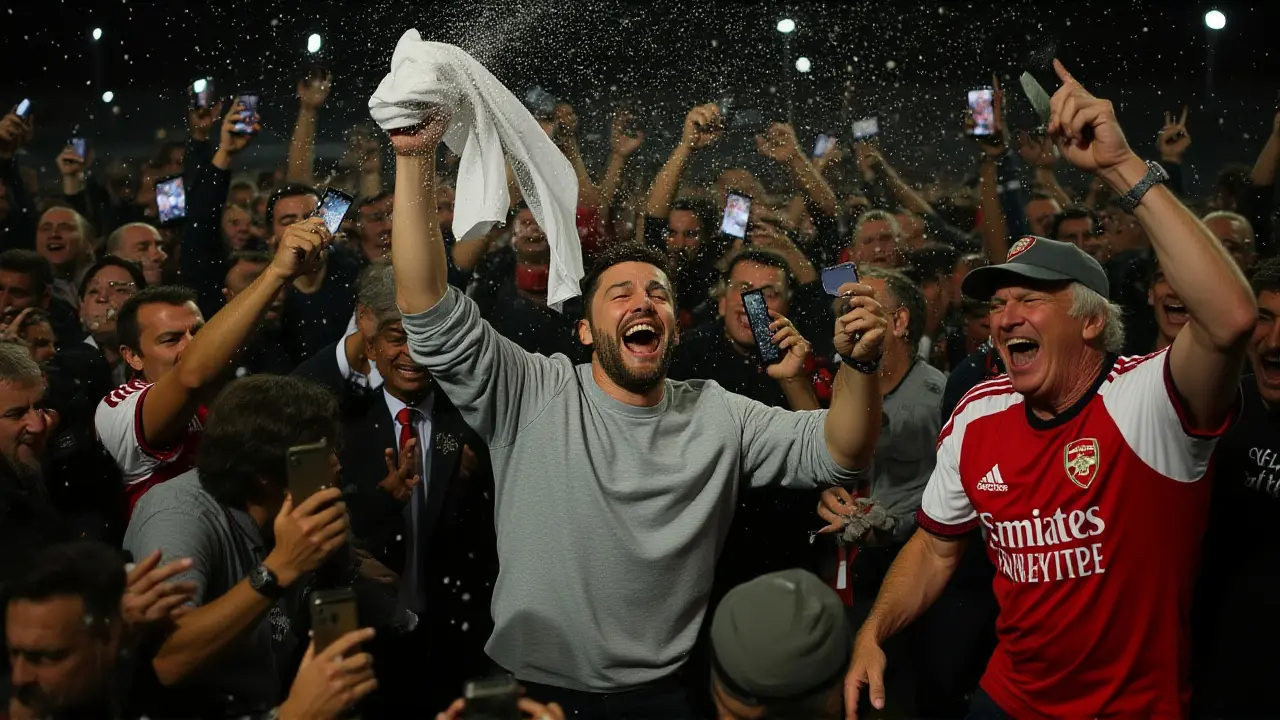
It’s rare for a football title win to trigger a government crisis, but that’s exactly what happened in Botswana this May. The southern African nation found itself at the center of an online storm after a forged document circulated widely, claiming the state had declared a special public holiday for supporters of Arsenal Football Club. The twist? It was all fake news.
The hoax emerged just as Arsenal secured their first English Premier League title in 22 years—a massive moment for fans worldwide. But while supporters in London were popping champagne, those in Gaborone were looking at their phones, confused by a notice that looked terrifyingly official. Here’s how a simple date error and a quick social media response from the government put the lie to the rumor.
The Forged Presidential Decree
The document in question wasn’t just a casual tweet or a meme. It was designed to look like an authentic government proclamation. It featured the Republic of Botswana’s coat of arms prominently at the top and bore a stamp purportedly from "the office of the president." According to reports from ESPN, the text claimed that Duma Boko, President of Botswana, had decided to reward Arsenal fans for their "passion, loyalty and unwavering support" with a day off work.
Imagine the excitement. A national holiday just because your team won the league? It sounds too good to be true, which is usually the first red flag. Yet, the document carried enough visual weight—official seals, formal language—to make many believers pause. It was dated Sunday, May 17, adding a layer of specificity that lent it false credibility. For a moment, it seemed like Botswana might have become the first country to officially recognize the Gunners’ triumph with civic time off.
Why the Timeline Didn't Add Up
But wait. If you’re an eagle-eyed fan—or just someone who pays attention to calendars—the inconsistencies jump out immediately. The fake statement was dated Sunday, May 17. However, Arsenal’s Premier League title wasn’t mathematically confirmed until later that week, on a Tuesday.
Here’s the context: Arsenal’s nearest rivals, Manchester City Football Club, drew 1-1 with AFC Bournemouth on that Tuesday. That result made it impossible for City to overtake Arsenal in the standings. You can’t declare a victory holiday three days before the victory is even guaranteed. The temporal mismatch was glaring. The forgery had tried to rush the celebration, but the calendar betrayed them.
Government Slams Back with 'FAKE' Label
The government didn’t let the misinformation fester. In a move that was both swift and visually striking, officials took to X (formerly Twitter) to debunk the claim. They reposted the exact same forged document, but this time, they stamped the word "FAKE" in bold red letters across the entire image.
Accompanying the image was a blunt, unambiguous message: "No, there is no holiday for Arsenal fans." There was no diplomatic hedging, no "we are investigating" preamble. Just a straight denial. This direct approach likely prevented further confusion among civil servants and employees who might have otherwise taken the day off, expecting a national closure.

The Rise of Sports-Fueled Misinformation
This incident isn’t isolated. As sports fandom becomes increasingly globalized, hoaxes linking major sporting events to real-world consequences are becoming more common. Whether it’s fake injury reports, transfer rumors, or in this case, fabricated government decrees, the line between digital jest and genuine deception is blurring.
What makes the Botswana case particularly interesting is the sophistication of the forgery. Using official state symbols suggests the creator wanted to maximize the shock value. It wasn’t just about trolling; it was about creating a viral moment that felt authoritative. The fact that it spread enough to warrant a government response shows how quickly digital falsehoods can gain traction when they tap into collective emotion—in this case, the joy of a long-awaited championship.
What This Means for Fans
For Arsenal supporters in Botswana, the disappointment of missing out on a free day off was likely outweighed by the pride of their team’s achievement. Winning the Premier League after a 22-year drought is historic. It validates years of investment, tactical shifts, and player development under recent management. The emotional high of the title win remains intact, regardless of whether the government gives you the day off.
However, the incident serves as a cautionary tale for all of us scrolling through social media during big match days. Always check the date. Verify the source. And remember: if a government suddenly decides to give you a holiday because Manchester United won the Champions League, you should probably double-check the facts first.
Frequently Asked Questions
Did Botswana actually declare a public holiday for Arsenal fans?
No. The government of Botswana explicitly denied the claim, labeling the circulating document as fake. They posted a clear statement on X confirming that no such holiday was declared.
Who created the fake government statement?
The identity of the person or group behind the forgery has not been disclosed. The government focused on debunking the content rather than announcing an investigation into its origin.
When did Arsenal confirm their Premier League title?
Arsenal’s title was confirmed on a Tuesday in May 2026, following a 1-1 draw between Manchester City and AFC Bournemouth. This result made it mathematically impossible for City to catch up.
Why was the fake document considered suspicious?
The document was dated Sunday, May 17, which was three days before Arsenal’s title was actually secured. This timeline inconsistency revealed it as a forgery before the government even responded.
How did the Botswana government respond to the hoax?
They reposted the fake document on X with a large red "FAKE" watermark across it and added the caption: "No, there is no holiday for Arsenal fans," directly addressing the misinformation.
Pranav Gopal
May 24, 2026 AT 15:33It is fascinating to see how quickly misinformation can spread when it aligns with people's hopes. The fact that the date was off by three days should have been a dead giveaway, but excitement often overrides logic. We need better media literacy education in schools to help people spot these obvious errors before they share them.
कमल कमल
May 24, 2026 AT 19:42Oh please, stop acting like this is some grand conspiracy or a failure of critical thinking on a massive scale, because frankly, it is just people being gullible sheep who want free time off work. :D You think Botswana government officials are sitting around crafting fake decrees for English football clubs? That is absurd. It is simply a prank gone viral because everyone loves a good excuse to skip their responsibilities. The timeline error was so obvious that anyone with basic calendar skills could see through it, yet here we are pretending it is a complex issue. Stop making everything about 'media literacy' and start taking responsibility for your own stupidity. People saw what they wanted to see, and that is all there is to it. No deep analysis needed. Just common sense, which seems to be in short supply these days. :)
harsh gupta
May 25, 2026 AT 02:38How quaint that you believe this was merely a 'prank.' The use of state symbols suggests a coordinated effort to destabilize public trust in institutions, even if only for amusement. It is a microcosm of the larger erosion of truth we are witnessing globally. The elites love to watch us squabble over trivialities while they manipulate the narrative. This isn't just about football; it is about conditioning the masses to accept whatever authority tells them is real, until authority itself becomes a joke. The government's response was performative, designed to look decisive while actually revealing their inability to control the digital discourse. We are all pawns in a game we do not understand, scrolling through our feeds while the world burns. How delightful.
Mukesh Katira
May 26, 2026 AT 00:02One must consider the philosophical implications of desire versus reality. The fans desired a holiday, and thus they perceived one. This is a classic example of confirmation bias at its most potent. However, I find the casual tone of your previous comments lacking in proper decorum. We should approach such matters with a certain level of formality and respect for the gravity of misinformation. It is not merely a mistake; it is a breach of social contract. When we allow falsehoods to circulate, we erode the very fabric of our shared reality. Therefore, it is imperative that we maintain a distance from such frivolous discussions and instead focus on cultivating a mindset of rigorous skepticism. Only then can we hope to navigate the treacherous waters of modern information exchange with any semblance of dignity.
Roop Kaur
May 27, 2026 AT 05:25I mean, obviously the algorithm pushed this because engagement metrics prioritize outrage and confusion over factual accuracy. It is part of the surveillance capitalism model where our attention is harvested and sold. But also, honestly? Who cares? It is just a meme. Let people enjoy their delusion for five minutes. The system is rigged anyway, so why not laugh at a fake holiday? It is kind of poetic, in a dystopian sort of way. The government stamping 'FAKE' on it is just another layer of control. They want to tell us what is real and what is not. Maybe the holiday would have been nice. Just saying. The whole thing is a bit surreal, like living in a simulation where nothing is quite as it seems. Anyway, back to scrolling.
Ankita Bajaj
May 28, 2026 AT 22:15Let us not be too hard on each other! It is completely understandable to get excited about Arsenal winning the title after such a long wait. The joy of sports brings people together, and sometimes that joy leads to moments of pure imagination. Instead of criticizing those who believed the hoax, let us celebrate the passion of the fans. It shows how deeply connected we are to our teams. A little bit of harmless fun during a historic moment is exactly what we need. Let us keep the positive vibes going and remember that community is more important than facts in these celebratory times. Go Gunners!
Manish gupta
May 29, 2026 AT 04:01Ugh, typical. Everyone wants to jump on the bandwagon and pretend they are so smart for spotting the date error. Please. It is pathetic how easily manipulated the general public is. And don't get me started on the 'community' aspect. There is no community, just a herd of followers waiting for the next dopamine hit. The government did the right thing by shutting it down, but let us be honest, they were probably embarrassed that their citizens were so naive. It is a reflection of the decline of intellectual rigor in society. We are becoming a nation of children who cannot distinguish between a meme and a decree. Tragic, really. But hey, at least it makes for good content on social media, right? Because that is all that matters now.
Sanjay Kumar
May 29, 2026 AT 18:23Look, I get the frustration, but let us take a step back. Sports are meant to be a source of unity and joy, not division and cynicism. The fact that this hoax spread so quickly says more about our collective hunger for connection than it does about our intelligence. We live in isolated lives, and a shared celebration, even a fake one, provides a brief moment of belonging. Rather than tearing each other down for believing it, perhaps we can learn from this. It reminds us to verify sources, yes, but also to appreciate the human need for hope and celebration. Let us support each other in staying informed while keeping the spirit of camaraderie alive. After all, that is what true fandom is about.
Gaurav Jangid
May 31, 2026 AT 04:16OMG!!! Can you imagine the chaos if it had been real?!??! People would have flooded the streets!!! Champagne popping everywhere!!! It is just SO sad that they had to burst the bubble!! :( But seriously, the graphics were pretty good, huh?? Like, really convincing!!! Until you looked at the date!!! Which was Sunday!!! And the title was Tuesday!!! So close!!! Yet so far!!! It is just hilarious how fast news travels!!! And how fast lies travel even faster!!! Wow!!! What a world we live in!!! :O
Ghanshyam Gohel
June 1, 2026 AT 16:33I understand the enthusiasm, however, it is crucial to maintain a formal perspective on such matters. The dissemination of false information, regardless of intent, has serious consequences. It undermines trust in official channels and creates unnecessary confusion. While I appreciate the colorful language used in previous comments, we must strive for clarity and precision. The government's swift action was necessary to restore order. Let us all take this as a lesson in verifying information before sharing. It is not about dampening the spirit of celebration, but about ensuring that our celebrations are based on reality. Thank you for your understanding in this matter.