
Myanmar Strikes Kill 25; Afghanistan Violence Displaces 20,000 Families
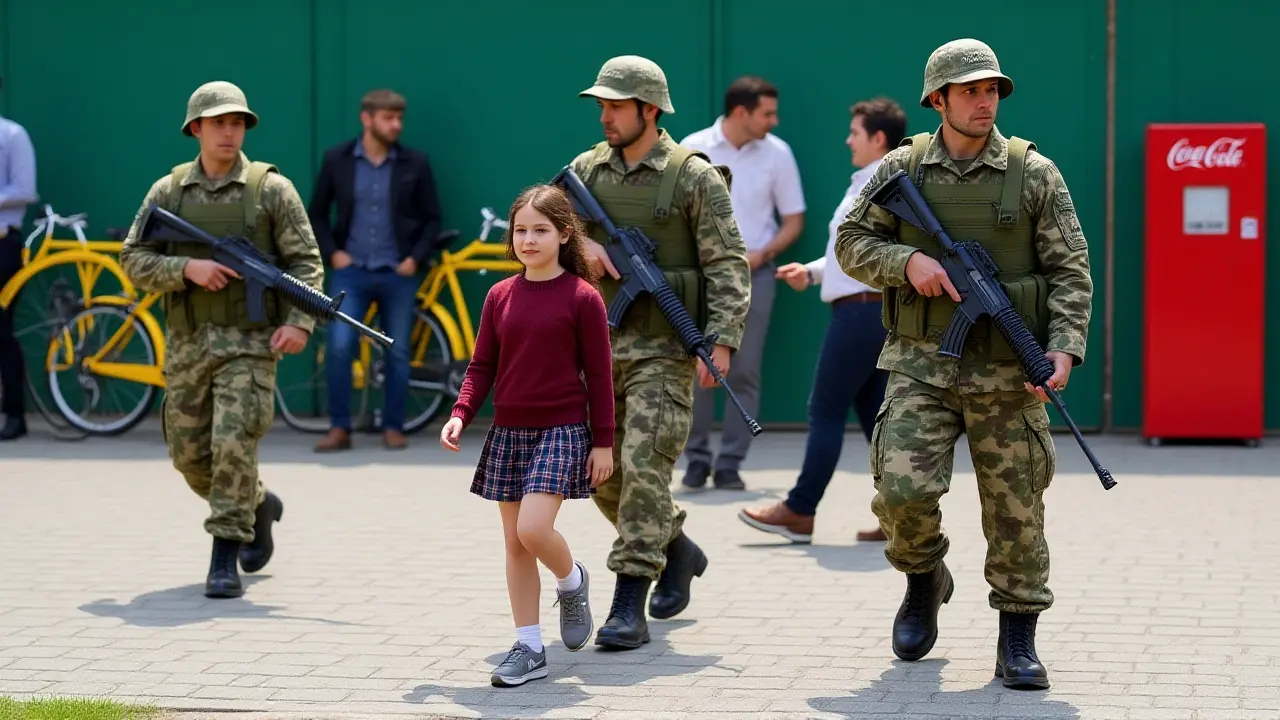
Early March 2026 brought bad news from two corners of Asia that make you worry about the future of civilian safety. In Myanmar, military airstrikes are hitting civilian markets with terrifying frequency, while fresh fighting along Afghanistan’s eastern border has already forced tens of thousands of families to flee their homes within days. The numbers aren’t just statistics; they represent real people losing everything.
According to reports emerging from the region, at least 25 individuals were killed in a recent bombardment at a trading junction in central Myanmar’s Magway Region, leaving dozens wounded. It is part of a disturbing trend tracked by United Nations Office for the Coordination of Humanitarian Affairs . Back in 2021, there were nine airstrikes on civilian targets. By 2025, that number jumped to 1,140. That’s a 12,000 percent increase in just four years.
A Deepening Crisis in Myanmar
The twist is that the violence isn’t just random. It’s targeted infrastructure that keeps communities alive. In Rakhine State alone, aerial attacks destroyed medical facilities and IDP camps, killing over 190 people. Across the country, more than 100,000 homes have been burned down nationwide. The fear is constant now, especially since junta forces have sharply increased their use of landmines, turning ordinary fields into death traps.
OHCHR reported that airstrikes attributed to Myanmar’s armed forces killed at least 982 civilians in 2025. That figure includes 287 children. When you think about that, it means roughly every fifth person killed was a kid. Nearly one-third of Myanmar’s population now needs assistance. More than 12 million people face acute hunger, and 3.6 million are displaced. It’s a spiraling emergency.
Funding gaps make it worse. The 2026 Humanitarian Needs and Response Plan calls for $890 million to reach 4.9 million people. Agencies reached 6.3 million people last year, including victims of a major earthquake in March 2025, but access is shrinking. OCHA noted in a Monday bulletin that the situation worsens with each passing year due to economic decline.
Cross-Border Violence in Afghanistan
While Myanmar burns, Afghanistan is facing its own storm. From February 26 to March 5, 2026, cross-border clashes between Pakistan and Afghanistan triggered massive displacement. Approximately 20,000 families moved across the Eastern, Southeastern, and Southern regions. That’s roughly 100,000 to 120,000 people uprooted in less than ten days.
UNAMA verified that 56 civilians were killed during this short period. Another 129 were injured. Here’s the sad part: women and children accounted for 55 percent of those casualties. The violence hit more than 46 districts, stretching from Nangarhar to Helmand. These affected provinces touch nearly one-third of Afghanistan’s 2,400-kilometer border with Pakistan.
Communities in mountainous Kunar and Nangarhar had already suffered a devastating earthquake on August 31, 2025. They lost family members and livelihoods, only to become the front line again. Now, half of these areas are experiencing Emergency levels of hunger. Four provinces are seeing critical acute malnutrition. It’s unbearable strain on people who have known nothing but crisis.
Funding Runs Out by April
The logistical nightmare caught the attention of John Aylieff, WFP Afghanistan Representative and Country Director. On March 3, 2026, he briefed the international community at the Palais des Nations in Geneva via Zoom. He warned that funding for emergency operations would run out by April 2026.
“WFP will not be able to reach families fleeing Iran and Pakistan,” Aylieff stated bluntly. “For our winter response this year, WFP was only able to provide food assistance to a fraction of those in need.” The organization needs $313 million for the next six months. One in three Afghans, representing 17.4 million people, are in urgent need of food assistance. Without help, 3.7 million children won’t get treatment for malnutrition in 2026. That is a catastrophic projection.
Justice Denied to Women
Beyond the physical danger, there is a quiet crisis regarding rights. Findings from UNAMA show that women in Afghanistan are nearly four times less likely than men to have access to formal justice mechanisms. Only 14 percent of women reported having access to formal dispute-resolution services. Compare that to 53 percent of men. It highlights a deepening inequality.
UNAMA reiterated its call for all parties to implement measures to prevent civilian harm. The message is clear: protection isn’t just about food anymore. It’s about legal survival. As we move further into 2026, the window for effective intervention is closing fast. The international community needs to act before the aid pipeline fully dries up.
Frequently Asked Questions
Why is the humanitarian situation in Myanmar worsening?
The situation is deteriorating primarily due to escalated military airstrikes and the spread of conflict. Aerial attacks rose from 9 in 2021 to 1,140 in 2025. Economic decline and recurrent disasters, such as the March 2025 earthquake, have compounded the vulnerability of 12 million people facing acute hunger.
How many people were displaced in Afghanistan recently?
Between February 26 and March 5, 2026, approximately 20,000 families were displaced due to cross-border violence with Pakistan. This affects nearly one-third of Afghanistan’s provinces and adds significant pressure to communities already recovering from the August 2025 earthquake.
When will WFP funding expire in Afghanistan?
According to WFP Country Director John Aylieff, funding for emergency operations is projected to run out by April 2026. The organization currently requires $313 million for the next six months to continue life-saving distributions.
What is the gender gap in justice access in Afghanistan?
There is a severe disparity, with women being four times less likely than men to access formal justice. Only 14 percent of women have access to dispute-resolution services compared to 53 percent of men, according to UNAMA findings.
Anirban Das
March 28, 2026 AT 10:50Seeing civilians get targeted like this honestly makes me feel so helpless and angry all at once :(
Priyank Prakash
March 29, 2026 AT 10:06My heart is literally breaking reading about these numbers and I cannot believe we are just sitting here watching people suffer through no fault of their own!! 😭🙏
Anamika Goyal
March 30, 2026 AT 04:34I understand exactly what you mean because the weight of seeing innocent lives lost is incredibly heavy on my soul every single day
We have to remember that behind every statistic there is a family praying for peace right now
Raman Deep
March 31, 2026 AT 04:21So much pain being caused rn and its rlly heartbreaking 😢 we shud help them asap plz 🙏💔
Mayank Rehani
March 31, 2026 AT 12:08Agreed on the immediate need for scaled aid response mechanisms given the current liquidity constraints within the humanitarian corridors.
Kartik Shetty
April 2, 2026 AT 05:29Look at the data trends and they show a catastrophic failure of international accountability regarding civilian protections in conflict zones
When infrastructure gets targeted systematically it indicates a strategic intent beyond mere collateral damage claims made by military spokespeople
The historical precedents suggest that without robust enforcement of sanctions these violations will only escalate further down the line
Economic decline compounds the issue significantly when supply chains are disrupted by active hostilities in key agricultural regions
Medical facilities destruction leaves populations vulnerable to preventable diseases which then spiral into epidemics without proper containment protocols
Children represent nearly half of the casualties here and that demographic impact reshapes generational stability for decades to come
The funding gap identified represents a critical bottleneck where political will meets logistical impossibility on the ground
International observers often document these breaches but lack the enforcement power to mandate cessation of hostilities effectively
We see similar patterns in other theaters where diplomatic pressure fails to stop ground operations targeting markets and camps
The silence of major powers allows these situations to rot unchecked while rhetoric about human rights remains unfulfilled in practice
Long term recovery requires security guarantees that currently appear entirely out of reach for local administrators managing refugee flows
Without addressing the root causes of aggression temporary relief becomes merely a bandaid on a gaping wound inflicted daily
It is disturbing to note how normalization of violence shifts public perception until atrocities become routine background noise in news cycles globally
Effective policy requires binding resolutions rather than voluntary contributions that vanish when domestic political priorities shift focus elsewhere
We need structural change not just charitable donations which inevitably dry up when attention moves to newer crises emerging elsewhere
Sharath Narla
April 3, 2026 AT 01:10Wow such a detailed breakdown for sure but does anyone actually listen to these reports anymore besides us regular folk scrolling by
vipul gangwar
April 3, 2026 AT 10:18People are suffering so badly right now and it just feels like nobody is listening properly to the warnings issued earlier by agencies.
shrishti bharuka
April 4, 2026 AT 05:51Funny how warnings usually mean nothing until the body count hits the front pages of major newspapers finally.
Robin Godden
April 5, 2026 AT 22:57We must maintain hope that international coordination efforts will eventually bridge the funding shortfall to assist displaced families.
Senthilkumar Vedagiri
April 6, 2026 AT 12:02Hope dont matter when the big players want resource control in those regions so thier agendas run deeper than aid.
Prathamesh Shrikhande
April 7, 2026 AT 23:21Let us send love and support to those impacted by this tragedy ❤️🤍💔🕊️ #PeaceNow