
Nigeria's 'Fake Agency' Scandal: ₦1.3bn Budget Line Defies Official Denials
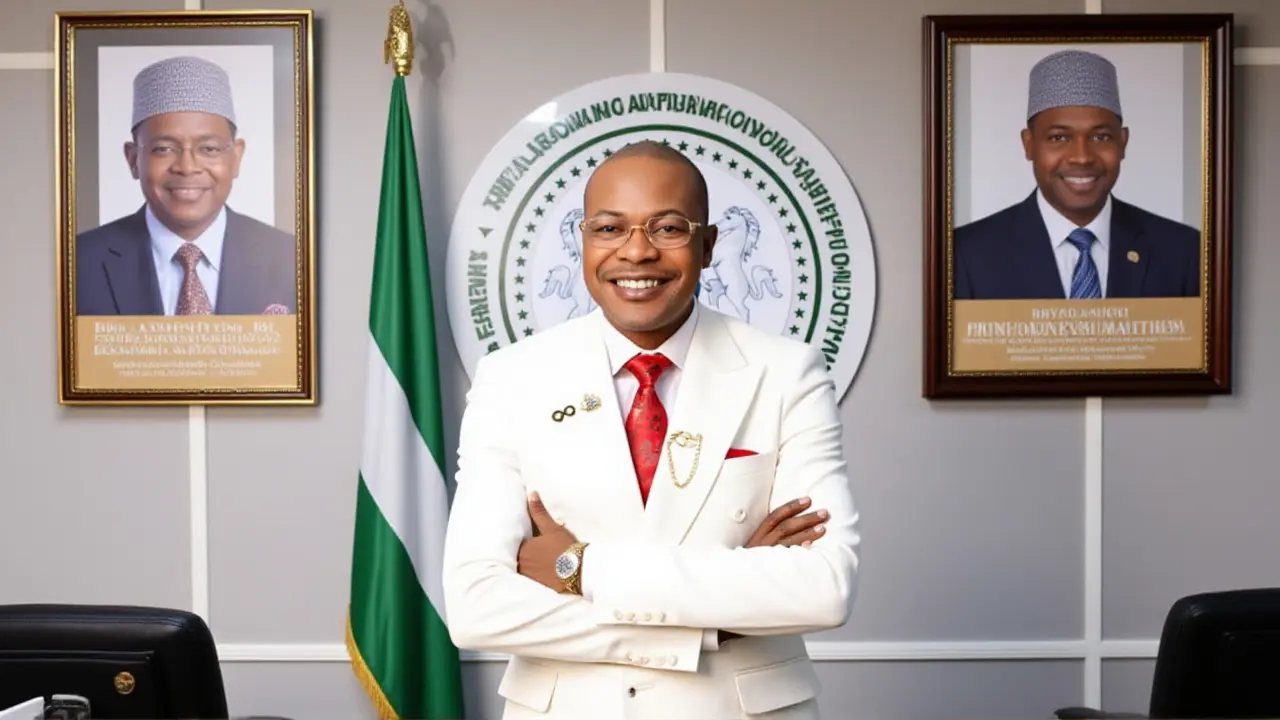
When Prince Adeniyi Adeyemi Matthew, alleged fraudster was arrested in Abuja last October, the Nigerian government expected the controversy to fade quickly. They called him a con artist. They said his agency didn't exist. But here’s the twist: instead of closing the case, the official clarification has ignited a firestorm of questions that are burning through the halls of power in Abuja.
The core issue isn't just about one man pretending to be someone he’s not. It’s about how a completely fictitious entity managed to secure a ₦1.3 billion line item in the 2026 national budget, open accounts at the Central Bank of Nigeria, and operate openly from an office inside the Federal Secretariat Complex for over a year without triggering any alarms.
The Impostor Who Walked Through Open Doors
Let’s break down what we know. The Presidency insists that the "Presidential Foreign Intervention Promotion Council" (PFIPC) never existed. According to them, Adeyemi is a serial impostor who forged documents to pose as its director-general. The Office of the Chief of Staff, led by Femi Gbajabiamila, Chief of Staff to the President, reportedly petitioned security agencies as early as October 2025 after discovering fake appointment letters.
But wait. If it was just a guy with some forged papers, why did he have an office in a federal building? Why did he meet senior government officials? And why do records show he maintained 34 bank accounts under the names of non-existent government bodies?
Adeyemi was arrested on 27 October 2025 following a petition by the Chief of Staff to the Nigeria Police Force. He now faces eight counts of conspiracy, forgery, and impersonation before the Federal High Court in Abuja. Yet, even while on police bail, he resurfaced in June 2026 claiming he had been appointed by Gbajabiamila—a claim the Presidency vehemently denied in a statement on 8 June 2026.
The Budget Hole That Won’t Close
This is where things get really messy. Critics aren’t buying the "ghost agency" narrative because the money trail is too thick to ignore. Social media posts and investigative reports highlight a staggering discrepancy: if the PFIPC was fake, how did it receive ₦1.3 billion in the 2026 budget? Some sources even cite a figure of ₦24 billion allocated to unknown agencies linked to this scandal.
Here’s the thing: budgets don’t just appear out of thin air. They require approval, verification, and oversight. For a fictitious council to secure such funding suggests either massive incompetence within the federal bureaucracy or deliberate complicity. As one senior advocate put it, "The government will have to explain to Nigerians how a whopping sum of N24bn was budgeted for an unknown agency."
The implications are severe. If internal controls failed this spectacularly, what else might be slipping through the cracks? The Central Bank of Nigeria allowing accounts for non-existent entities raises serious concerns about financial integrity at the highest levels.
Political Fallout and Demands for Answers
The political reaction has been swift and sharp. Former Vice President Atiku Abubakar, Former Vice President of Nigeria has been vocal, demanding that President Bola Tinubu explain how the fake agency obtained its budget allocation. Abubakar’s team argues that the documented engagements involving the alleged agency suggest it operated openly, making the Presidency’s description of it as a "ghost" difficult to reconcile with public records.
"If the agency never existed, Nigerians deserve a clear explanation," Abubakar stated, pointing out that the affair "raised more questions than answers." Other commentators, including journalist Mustapha Bature Sallama, note that even those sympathetic to the Presidency acknowledge the problems created by unexplained financial anomalies.
The opposition is calling for an independent inquiry—not just into Adeyemi’s actions, but into the systemic failures that allowed him to operate for so long. They want to know who approved the budget lines, who authorized the bank accounts, and why no red flags were raised until late 2025.
What Happens Next?
As of early July 2026, Adeyemi’s trial is pending. The Presidency continues to portray him as a lone wolf criminal, dismissing broader allegations like a reported ₦400 million bribery payment as part of his scam. However, without a comprehensive, independent investigation, these doubts will linger.
The timeline for any further official review remains undefined. But given the intensity of public outrage and the involvement of high-profile political figures, pressure is mounting for transparency. Whether this leads to significant reforms in Nigeria’s bureaucratic oversight mechanisms remains to be seen.
Frequently Asked Questions
Who is Prince Adeniyi Adeyemi Matthew?
Prince Adeniyi Adeyemi Matthew is a man accused of forging documents to pose as the director-general of a fictitious body called the Presidential Foreign Intervention Promotion Council. He was arrested in October 2025 and currently faces eight criminal charges including conspiracy and forgery in Abuja.
Why is the 'fake agency' scandal significant?
The scandal is significant because it reveals potential massive lapses in Nigeria's financial and bureaucratic oversight. Despite being declared fictitious by the Presidency, the agency allegedly secured ₦1.3 billion in the 2026 budget and opened accounts at the Central Bank of Nigeria, suggesting deep systemic vulnerabilities.
What role does Femi Gbajabiamila play in this controversy?
Femi Gbajabiamila, the Chief of Staff to the President, is central to the story. His office first raised the alarm about forged appointment letters bearing his purported signature. Critics are now questioning whether he was unaware of the agency's operations or if there was negligence in verifying appointments and budget allocations.
Did the fake agency actually receive budget funds?
Reports indicate that ₦1.3 billion was allocated to the Presidential Foreign Intervention Promotion Council in the 2026 national budget. While the Presidency denies the agency's existence, critics argue that the presence of this budget line proves the entity had some level of official recognition or that internal controls failed catastrophically.
What are opponents demanding regarding this scandal?
Opposition figures, including former Vice President Atiku Abubakar, are demanding an independent inquiry into how the fake agency operated for over a year. They want explanations for the budget allocations, bank accounts, and meetings with senior officials, arguing that current statements from the Presidency do not address these critical issues.
Pranav Gopal
July 5, 2026 AT 03:51It is genuinely alarming to see how systemic failures can persist for so long without immediate detection. The fact that a non-existent agency could secure such a significant budget allocation points to deeper issues within the bureaucratic oversight mechanisms. We need to look at this not just as an isolated incident of fraud, but as a symptom of a larger structural problem that requires comprehensive reform and accountability measures.
कमल कमल
July 5, 2026 AT 08:45You people are always jumping on these stories without understanding the nuance of international relations and internal security protocols. This is clearly a setup by foreign entities trying to destabilize the region, and instead of looking at the bigger picture, you are focusing on petty administrative errors. It is typical of the media to sensationalize minor issues while ignoring the real threats facing national sovereignty and stability in our current geopolitical landscape.
harsh gupta
July 7, 2026 AT 04:58Oh, please. Spare me the patriotic rhetoric. This isn't about foreign agents; it is about the usual suspects looting the treasury while pretending to be busy with 'national security.' The elites have been playing this game for decades, creating shell companies and ghost agencies to siphon off public funds. They think we are too stupid to notice when billions disappear into thin air, but the math doesn't lie.
Mukesh Katira
July 7, 2026 AT 18:33The moral decay evident in this situation is truly profound. When institutions fail to uphold basic integrity, the social contract begins to unravel. It is not merely a financial loss but a betrayal of trust that erodes the very foundation of governance. We must reflect on the ethical implications of allowing such impunity to flourish within our highest offices.
Roop Kaur
July 8, 2026 AT 19:59Look at the pattern here. It is not random. The timing, the amounts, the connections-it all points to a coordinated effort to drain resources from the public sector. These are not incompetent clerks making mistakes; these are sophisticated actors exploiting weaknesses in the system. You cannot ignore the signs when they are screaming at you from every angle.
Ankita Bajaj
July 10, 2026 AT 13:04Let us focus on solutions rather than just pointing fingers. There is still hope for reform if we work together to demand transparency and better oversight. Every citizen has a role to play in holding leaders accountable and pushing for positive change. Let us channel our energy into constructive dialogue and action.
Manish gupta
July 11, 2026 AT 08:19Sure, let us all hold hands and sing kumbaya while the money vanishes. That is exactly what they want us to do-stay distracted and hopeful while they finish the job. Your optimism is naive and dangerous. Wake up and smell the corruption before it is too late.
Sanjay Kumar
July 12, 2026 AT 00:22I understand the frustration, but anger alone will not solve this. We need to support initiatives that promote good governance and civic education. By empowering ourselves with knowledge and participating actively in democratic processes, we can create a culture where such scandals become impossible to hide.
Gaurav Jangid
July 13, 2026 AT 18:30This whole saga is absolutely mind-blowing!!! How does one even process the sheer audacity of it all?! I mean, seriously, opening bank accounts for a fake agency? Are they mocking us or what?! It feels like we are living in some twisted cartoon where logic goes out the window and greed takes over completely!!!
Ghanshyam Gohel
July 15, 2026 AT 17:55I hear your outrage, and it is valid. However, we must remain composed and analytical. The formal procedures for investigation are underway, and we should respect the legal process. Aggression will not expedite justice; patience and persistence will. Let us monitor the developments closely and respond with dignity.
Nathan Lemon
July 16, 2026 AT 12:37From a cultural perspective, this incident highlights the erosion of traditional values of honesty and diligence in modern administration. It is imperative that we reinvigorate these principles through educational reforms and community engagement programs that emphasize ethical leadership and responsible citizenship.