
Ramaphosa Vows to Rebuild Police Service Amid Crisis and Inequality
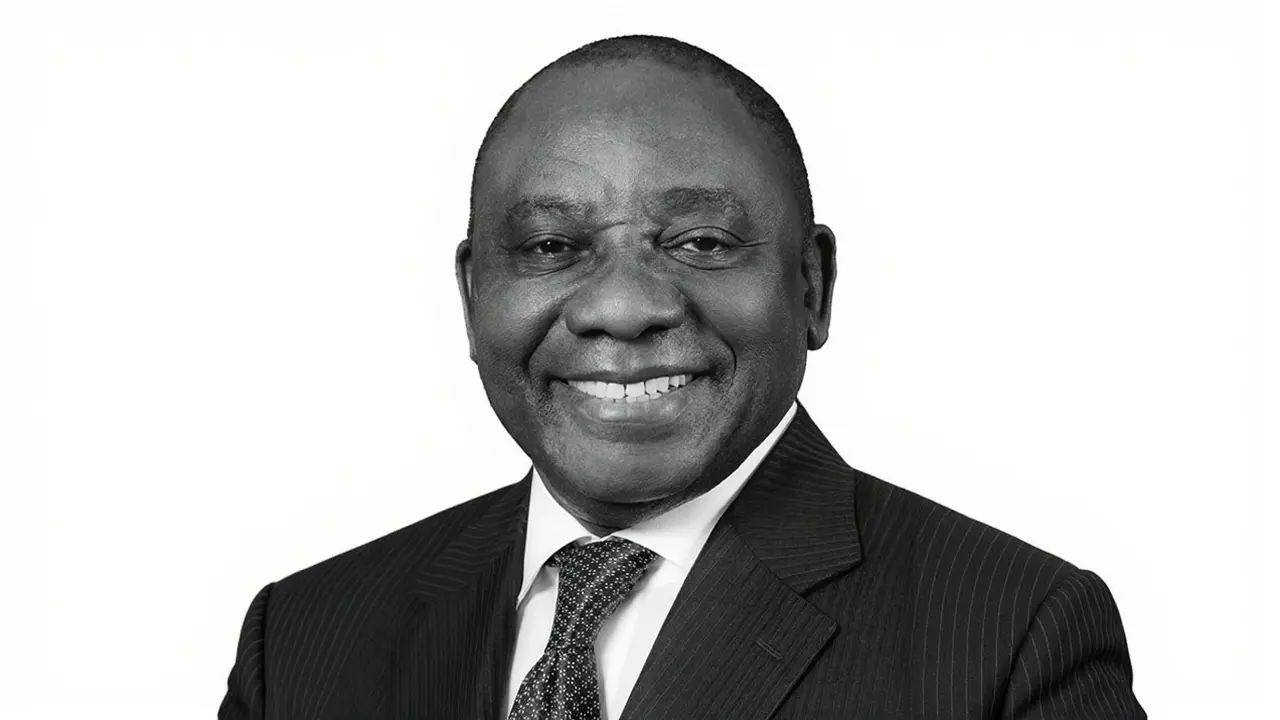
When Cyril Ramaphosa, President of South Africa, stood before the cameras at the Union Buildings on April 23, 2026, he wasn't just giving a routine update. He was sounding an alarm about the state of the South African Police Service (SAPS). With the nation watching, the President admitted that the country's primary law enforcement arm is effectively broken and requires a total overhaul to remain viable.
The briefing took place at the Union Buildings in Pretoria, where Ramaphosa was flanked by Firoz Cachalia, the Acting Minister of Police. It was a high-stakes moment, designed to address the growing turmoil within the police ranks and the rising tide of violent crime that has left many South Africans feeling vulnerable in their own homes.
Here's the thing: this wasn't just about administrative changes. The President's language was unusually blunt. He didn't talk about "optimizing" or "enhancing" the force. Instead, he used words like "rebuilt" and "repaired." It's a rare admission from the top office that the system isn't just leaking—it's structurally unsound.
Key Facts from the Presidential Briefings:
- Date of Police Briefing: April 23, 2026, at 16:00.
- Primary Objective: Overhaul of the SAPS to combat corruption and violence.
- Priority Areas: Gender-based violence (GBV) and femicide.
- Parallel Event: Launch of the International Panel on Inequality on April 24, 2026.
- Regional Action: Launch of the Senqu Bridge in Lesotho on April 22, 2026.
The Blueprint for a Broken Police Force
During the media briefing on police turmoil Pretoria , Ramaphosa made it clear that the fight against violent crime is failing because the tools—the police themselves—are compromised. He stated, "The police service needs to be rebuilt. It needs to be repaired and it needs to be made fit and proper to be able to fight crime on an ongoing basis."
But wait, the problem goes deeper than just manpower. The President highlighted a corrosive internal culture of corruption and violence within law enforcement. It's a classic "who polices the police" dilemma. To counter this, the government is leaning heavily into an integrated crime and prevention strategy, focusing on systemic changes rather than quick fixes.
A significant portion of the strategy is dedicated to the ongoing crisis of gender-based violence and femicide. This isn't new territory for the administration, but the urgency has shifted. The President indicated that these initiatives are no longer secondary goals—they are central to the survival of the social fabric. The twist is that for these strategies to work, the police officers implementing them must first be cleansed of the very corruption that allows these crimes to go unpunished.
From Local Crime to Global Inequality
Interestingly, the President's schedule over these 48 hours suggests a broader philosophy: you cannot fix crime without fixing the gap between the rich and the poor. Just one day after his police briefing, on April 24, 2026, Ramaphosa delivered a keynote address to the Founding Committee of the International Panel on Inequality.
The event, held in partnership with the Wits' Southern Centre for Inequality Studies, shifted the lens from Pretoria's streets to the global stage. By linking the police crisis to a discussion on global inequality, the administration is acknowledging that violent crime is often a symptom of economic desperation and systemic unfairness.
Turns out, this pattern of "inclusive development" was also the theme of his trip to the Kingdom of Lesotho on April 22, 2026. While launching the Senqu Bridge in Mokhotlong, he focused on ensuring that local households weren't pushed further into poverty by the construction process. It's a consistent, if ambitious, thread: the government is trying to project an image of a "caring state" while simultaneously admitting that its security apparatus is in shambles.
Expert Analysis: Can the SAPS Actually Be 'Repaired'?
Many analysts are skeptical. The phrase "made fit and proper" sounds good in a press release, but the reality on the ground is grittier. For years, the SAPS has struggled with political interference and a lack of basic resources. Some believe that until the National Commissioner's office is completely insulated from political whims, the "repair" will be superficial.
However, others argue that the admission of failure is the first step toward success. By publicly stating that the service needs to be rebuilt, Ramaphosa is creating a benchmark for accountability. If the crime stats don't drop by late 2026, the political cost for the administration will be immense.
The ripple effects of this approach could be significant. If the government successfully integrates the crime prevention strategy with an aggressive anti-corruption drive, it could restore public trust. But if this is just more rhetoric, the gap between the state and the citizens—already widened by the inequality discussed at the Wits event—will only grow.
What Happens Next?
The immediate focus will be on the implementation of the "integrated crime and prevention strategy." We can expect to see a flurry of disciplinary hearings and perhaps a reshuffling of high-ranking police officials in the coming months. The administration is also under pressure to show tangible results in the fight against femicide, a metric that the public tracks with visceral intensity.
Furthermore, the international community will be watching the International Panel on Inequality. If South Africa can lead a global conversation on wealth disparity while struggling with its own internal security, it will be a precarious balancing act of diplomacy and domestic crisis management.
Frequently Asked Questions
What specifically did President Ramaphosa say about the police?
The President stated that the South African Police Service (SAPS) is in need of being "rebuilt" and "repaired." He emphasized that the force must be made "fit and proper" to effectively combat crime on an ongoing basis, acknowledging that current internal turmoil and corruption are hindering their performance.
Who accompanied the President during the police briefing?
President Ramaphosa was accompanied by Firoz Cachalia, who is serving as the Acting Minister of Police. Their joint presence at the Union Buildings on April 23, 2026, signaled a unified executive approach to handling the crisis within the law enforcement sector.
What are the priority areas for the new crime prevention strategy?
The administration is focusing heavily on gender-based violence (GBV) and femicide. Additionally, they are implementing an integrated crime and prevention strategy designed to tackle violent crime through a combination of law enforcement reform and systemic social interventions.
How does the International Panel on Inequality relate to the police issues?
While separate events, the President's address to the International Panel on April 24 underscores the belief that inequality is a root cause of crime. By addressing global inequality via the Wits' Southern Centre for Inequality Studies, the government is linking social stability to economic fairness.
What happened during the President's visit to Lesotho?
On April 22, 2026, President Ramaphosa launched the Senqu Bridge in Mokhotlong. He emphasized inclusive development, ensuring that the construction of the bridge did not leave local households worse off, though he admitted that more work is needed to satisfy community needs.
Shelley Brinkley
April 25, 2026 AT 16:37classic govt talk just sayin the police are corrupt n dont fix it anyway lol
Gary Clement
April 26, 2026 AT 21:14it makes a lot of sense to link inequality to crime rates because systemic poverty usually drives the desperation that leads to violent crime in these regions
Senthilkumar Vedagiri
April 28, 2026 AT 13:53Oh sure, the "International Panel on Inequality" is just a smoke screen for the globalists to distract us while they basically admit the local cops are just a gang with badges lol. Bet there is a secret deal with Lesotho too that they arent telling us about!
Angie Khupe
April 29, 2026 AT 07:51I really hope this leads to more safety for women and girls in the community. It would be so wonderful to see actual progress here! :) :)
Aaron X
April 30, 2026 AT 22:09The teleological framing of this reform suggests a dialectic between institutional decay and the aspiration for a Hegelian synthesis of order. We are witnessing a structural paradigm shift where the state attempts to reconcile its ontological failure of security with a socio-economic mandate for equity. However, without a fundamental epistemological break from the existing bureaucratic inertia, this is merely a performative iteration of governance that fails to address the underlying systemic entropy.
Antony Bachtiar
May 2, 2026 AT 19:04rebuilidng a police force isnt as simple as saying it in a press meetin. these guys have been failing for decads and now suddenly they got a blueprint? gimme a break. its just more empty prommises to keep people quiet while the rich stay rich
Dianna Knight
May 3, 2026 AT 23:20It is so heartening to see the administration acknowledge the intersectionality of gender-based violence and systemic corruption! 🌟 By implementing a more holistic framework for socio-economic upliftment, we can hopefully mitigate the triggers of aggression in the community. Sending so much positivity to the people of South Africa during this transition! ✨
nikolai kingsley
May 4, 2026 AT 12:54totally disgussting that he thinks a bridge in Lesotho fixes the mess at home. the sheer audacitiy to pretend a few concrete slabs make up for a broken police force is insane. we need real accountability not some performative travel log of his favrit projects
Josh Raine
May 5, 2026 AT 17:17Why are we even pretending this is a plan?! 😡 It's a disaster! You can't just "repair" a force that is fundamentally rotten to the core without purging the entire leadership first. It's an insult to the victims of femicide to think a "strategy" is enough when people are literally dying every day while the police look the other way! :)
Mason Interactive
May 7, 2026 AT 12:12It's an interesting move to bring in the Wits center for the inequality talk. Definitely gives it more academic weight than just a political speech.
Beth Elwood
May 7, 2026 AT 14:37The focus on GBV is the most critical part here. If they can actually get the police to take reports seriously and stop the victim-blaming culture, that would be a huge win 🚔✅. Most of these systemic failures start with a lack of training at the station level, so I hope the "rebuild" includes a massive retraining program for officers on the front lines 📚💪.
Mel Alm
May 9, 2026 AT 01:46hope things get bettter for the peopel there
Alex Green international
May 11, 2026 AT 01:30It is quite admirable that the President has acknowledged the systemic failures of the police service. One must believe that admitting the problem is the necessary first step toward a sustainable solution. I trust that with a measured approach and a commitment to ethics the service will eventually regain the trust of the citizens